

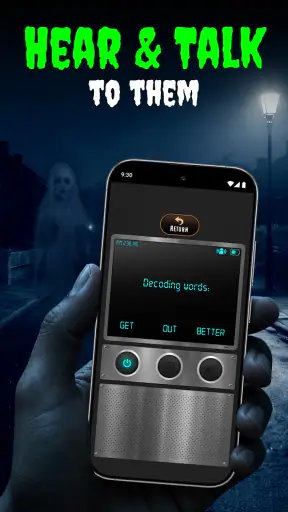
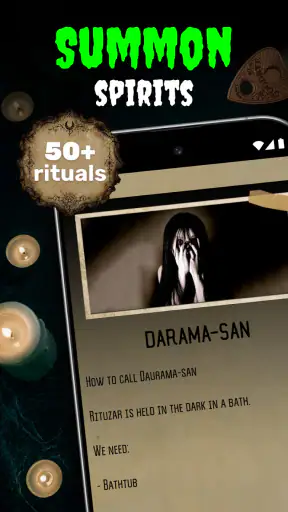
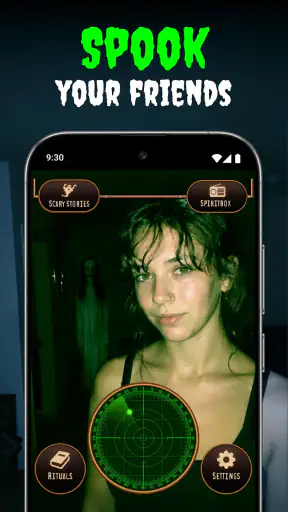
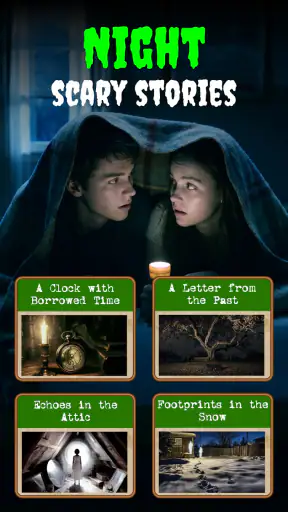
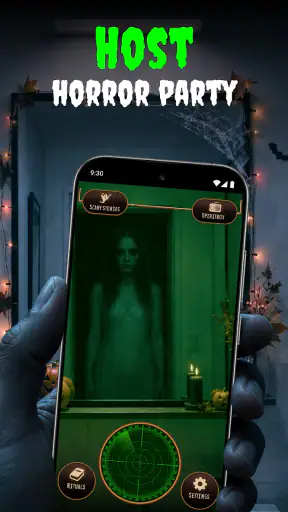
I approached Ghost Detector Pro Radar as an entertainment app rather than as a scientific instrument, and that distinction shapes the whole experience. Its main appeal is simple: it turns a phone into a playful paranormal investigation tool, with radar-style visuals, EMF-themed readings, and a ghost-box-inspired interaction. I found the most interesting part was not whether the screen could prove anything supernatural, but how the app creates a shared activity from ordinary surroundings.
That makes it a better fit for a late-night joke, a party challenge, or a spooky walk around a familiar room than for anyone seeking reliable evidence. The app is free to install, carries a Teen content rating, and comes from the developer Cards. It sits in the entertainment category, where atmosphere and ease of use matter more than technical measurement. Used with the right expectations, it can be amusing. Used as a serious detector, it is likely to disappoint.
What the radar-style capability really adds
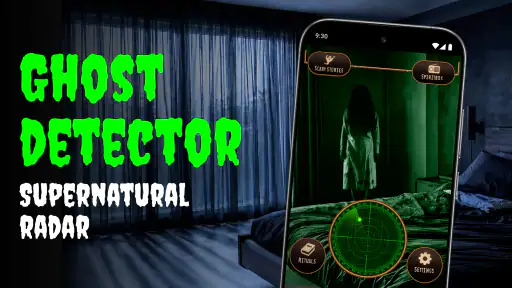
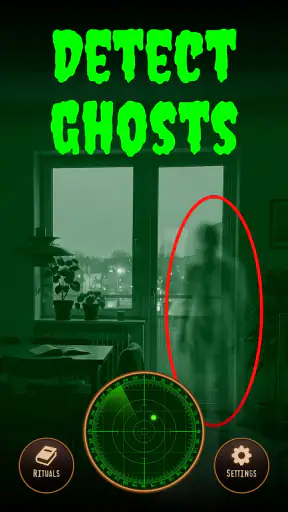
The defining capability is the radar presentation. Instead of opening to a plain menu or a complicated instrument panel, the app frames paranormal play as an active search. You point the phone around, watch the display, and wait for a response. That visual language gives the experience a clear goal: scan the space and see whether anything appears to react.
In practice, the radar does more than decorate the screen. It changes how I behaved with the phone. A normal novelty soundboard can be used passively, but a radar encourages movement, pauses, and repeated checks from different positions. I naturally started comparing one corner of a room with another, turning the activity into a small investigation rather than simply pressing a button.
That is the app’s strongest entertainment idea. It gives people something to do together. One person can hold the phone while another chooses where to scan, and everyone can react to whatever appears. The experience works especially well when the group agrees to treat the results as part of a spooky game instead of treating them as factual readings.
The EMF-themed presentation also helps the illusion feel familiar. People who have seen paranormal shows will immediately understand the visual suggestion: move slowly, watch for changes, and interpret the display. Even without specialist knowledge, the interface communicates its purpose quickly. I did not need a long tutorial to understand the basic loop.
Still, the radar should not be confused with a calibrated field meter. A phone app can present a convincing reading without turning the handset into professional paranormal equipment. This is an important practical boundary. The screen may react in an entertaining way, but that reaction should not be used to accuse a house, identify a person, or make decisions about safety.
How I used it in an ordinary room
My most useful test was deliberately unglamorous: I used the app in a familiar room rather than looking for an obviously dramatic location. That removed some of the easy atmosphere and made me pay attention to the interaction itself. The radar-style display gave the room a new focus, even though nothing about the furniture or lighting had changed.
I found that slow movement made the activity more enjoyable than waving the phone randomly. Holding the device steady for a moment gave everyone time to look at the screen, while moving too quickly made any change feel difficult to interpret. This is a small but worthwhile tip: treat each scan as a short observation rather than constantly sweeping the phone around.
A second useful habit is to establish a baseline before telling the story. I would begin in an ordinary area, note what the display does, and only then move toward the chosen “mystery” spot. This does not make the readings scientific, but it prevents the group from deciding in advance that every visual change must mean something. It also makes the game more suspenseful because there is a clear comparison.
The app is most convincing as a social prop when one person operates it and another narrates the scene. If everyone holds a phone and checks independently, the novelty can disappear quickly. With one device, the group watches the same screen and builds a shared story. That simple arrangement made the experience feel more focused and reduced the temptation to tap through every option immediately.
I would also keep the volume and setting comfortable. A sudden sound or spooky response can be fun among friends, but it may be unpleasant for younger children, nervous guests, or people who do not enjoy paranormal themes. The Teen rating is a useful reminder that this is not designed as a completely neutral toy for every age group.
A realistic use case: turning a gathering into a short activity
Imagine a few friends waiting for a film to start during a sleepover or a casual evening at home. Instead of passing around an endless stream of short videos, one person opens the app and proposes a ten-minute room scan. The group chooses three places, such as a hallway, a cupboard, and a quiet corner, then compares what happens in each location.
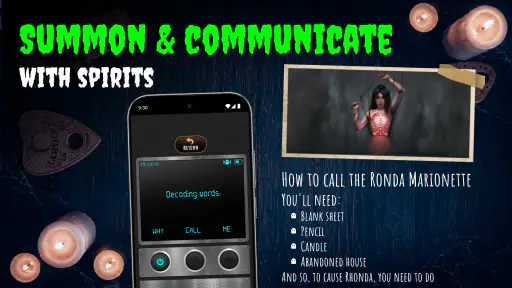
That scenario suits the app better than a long solo session. The radar gives the group a reason to move around, while the ghost-box-style idea provides a talking point when the display or audio changes. Nobody needs to know how paranormal equipment works. The entertainment comes from guessing, reacting, and telling a story around the result.
There is also a useful storytelling rule here: do not reveal your interpretation too early. Ask the other people what they noticed before suggesting that a location felt unusual. This keeps the app from becoming a one-person performance and makes the responses feel less forced. It is a small social technique, but it noticeably improves the experience.
For a themed party, I would use it as one activity among several rather than the entire evening. The novelty is strongest during the first few scans. After that, repeating the same interaction can feel predictable. A short session preserves the mystery, while a long session risks exposing the app as a novelty tool with limited depth.
It can also work as a creative prompt. Someone writing a ghost story could use the radar session to choose a setting or invent a scene: a response in a quiet corridor becomes the starting point for a fictional explanation. In that role, the app is not pretending to solve a real mystery; it is helping people generate one.
Where it differs from ordinary entertainment alternatives
The closest alternatives are not necessarily other paranormal apps. A standard soundboard offers quicker reactions, and a casual horror game usually provides a more structured objective. A video or interactive story delivers stronger production and a clearer beginning and ending. This app sits between those options: it supplies a themed tool, but asks the user to create much of the scenario.
That makes it more flexible than a fixed horror experience. I can use it in a bedroom, at a party, or as a prop for a fictional investigation without following a prescribed level. On the other hand, it has less depth than a game built around progression, puzzles, characters, or a detailed story. If I want a complete horror adventure, I would choose a dedicated game instead.
Compared with a conventional EMF meter, the difference is even more important. A purpose-built instrument is intended to measure a physical property under defined conditions, while this app presents a paranormal-themed simulation and entertainment experience. Anyone who needs repeatable measurements, technical controls, or evidence suitable for a serious investigation should look elsewhere.
The app’s advantage is accessibility. I do not need to carry separate equipment or learn a complicated interface before trying the concept. The phone is already in my hand, and the radar presentation makes the activity understandable within moments. Its weakness is the same simplicity: there is not much for an experienced hobbyist to analyze beyond the immediate visual and audio effect.
The tradeoffs behind the free download
The free price lowers the barrier to trying it, which is appropriate for a novelty app. I could test the basic idea without committing to a purchase, decide whether the atmosphere suited my group, and remove it if the experience was not for me. That is a sensible model for something designed around occasional entertainment.
There are in-app purchases ranging from under a dollar to around a hundred dollars per item. That wide range deserves attention before spending anything. I would start with the free experience and ask whether the extra content changes how I actually use the app, rather than assuming that a paid option will make the readings more credible or the activity more scientific.
Purchases may also change the tone of a group session. If the app is being used casually at a party, paying for more material may not add enough value to justify the expense. For someone who returns to the app regularly and enjoys collecting paranormal-themed tools, the calculation could be different, but I would still treat every purchase as entertainment spending rather than equipment investment.
The current version is 1.0.50, and the app supports devices running Android 7.1 or later. That relatively broad platform reach makes it easier to use an older spare phone for a group activity, provided the device meets that requirement. An older handset can actually be convenient because nobody has to hand over their primary phone for the whole session.
One practical limitation is attention span. The radar concept is immediately understandable, but the app does not automatically become deeper just because it is easy to start. I would expect the strongest value during short, themed sessions. People looking for persistent progression, detailed records, or a campaign-like structure should lower their expectations before installing it.
Another limitation is interpretation. The more seriously someone treats an on-screen response, the more likely the experience is to become misleading. I would never use it to make claims about a property, frighten someone who has not agreed to participate, or replace professional help when a situation involves health, safety, or genuine distress. The responsible way to enjoy it is to keep the fictional and playful frame visible.
Who is likely to get the most from it?
I think the best audience is made up of curious friends, horror fans, party hosts, and people who enjoy turning a familiar environment into a temporary story setting. The app is particularly suitable for users who value atmosphere and participation more than technical accuracy. If you like improvising explanations and watching other people react, the radar gives you a useful centerpiece.
It may also suit someone who wants a quick paranormal-themed distraction without learning a full game. The low commitment is part of the appeal. Open it, choose a location, scan for a while, and move on to another activity. That makes it easier to recommend for occasional use than for daily entertainment.
I would advise a different option for several types of users. A serious paranormal investigator should use appropriate physical instruments and established methods. A player wanting a rich horror narrative should choose a story-driven game. Someone sensitive to frightening themes should avoid surprise sessions or participate only after seeing how the app behaves. Parents should also consider the Teen rating before handing it to a child.
The app has earned a 4.6 average from around 31 thousand ratings, with more than 5 million installs, so it clearly appeals to a substantial audience. Those figures suggest strong curiosity around the concept, but they do not change the central judgment: popularity is not proof that the radar detects anything supernatural. I see the numbers as evidence that many people enjoy the format, not as validation of its readings.
Cards has kept the concept focused enough that a first-time user can understand the attraction quickly. The combination of radar imagery, EMF language, and ghost-box flavor gives the app a recognizable identity instead of feeling like a generic randomizer. Its success depends on the user supplying the imagination, and that is both its charm and its ceiling.
My recommendation after using it
I would recommend Ghost Detector Pro Radar to a friend who wants a playful paranormal prop for a short social session. I would explain the important condition first: enjoy the suspense, but do not treat the display as scientific proof. That one expectation makes the experience more comfortable, more honest, and usually more fun.
My preferred workflow is simple. Start with a neutral room, keep the phone steady, let one person operate it, and compare a few locations before inventing an explanation. Use it for a defined activity, then stop while the novelty still feels fresh. If the group wants a stronger horror experience afterward, move to a dedicated game or film rather than expecting this app to provide a full adventure.
Overall, this is a free entertainment app with a clear central trick: the radar turns an ordinary space into a shared paranormal scenario. It is not the right choice for measurement, investigation, or deep replay value. But for friends who enjoy suspense, improvisation, and a harmless bit of spooky theater, the radar is effective because it gives everyone a reason to look, wait, and react together.


